Fully Recyclable in end of life-span
 Manufactured in great Britain
 All weather resistant hoardings
 Manufactured using waste content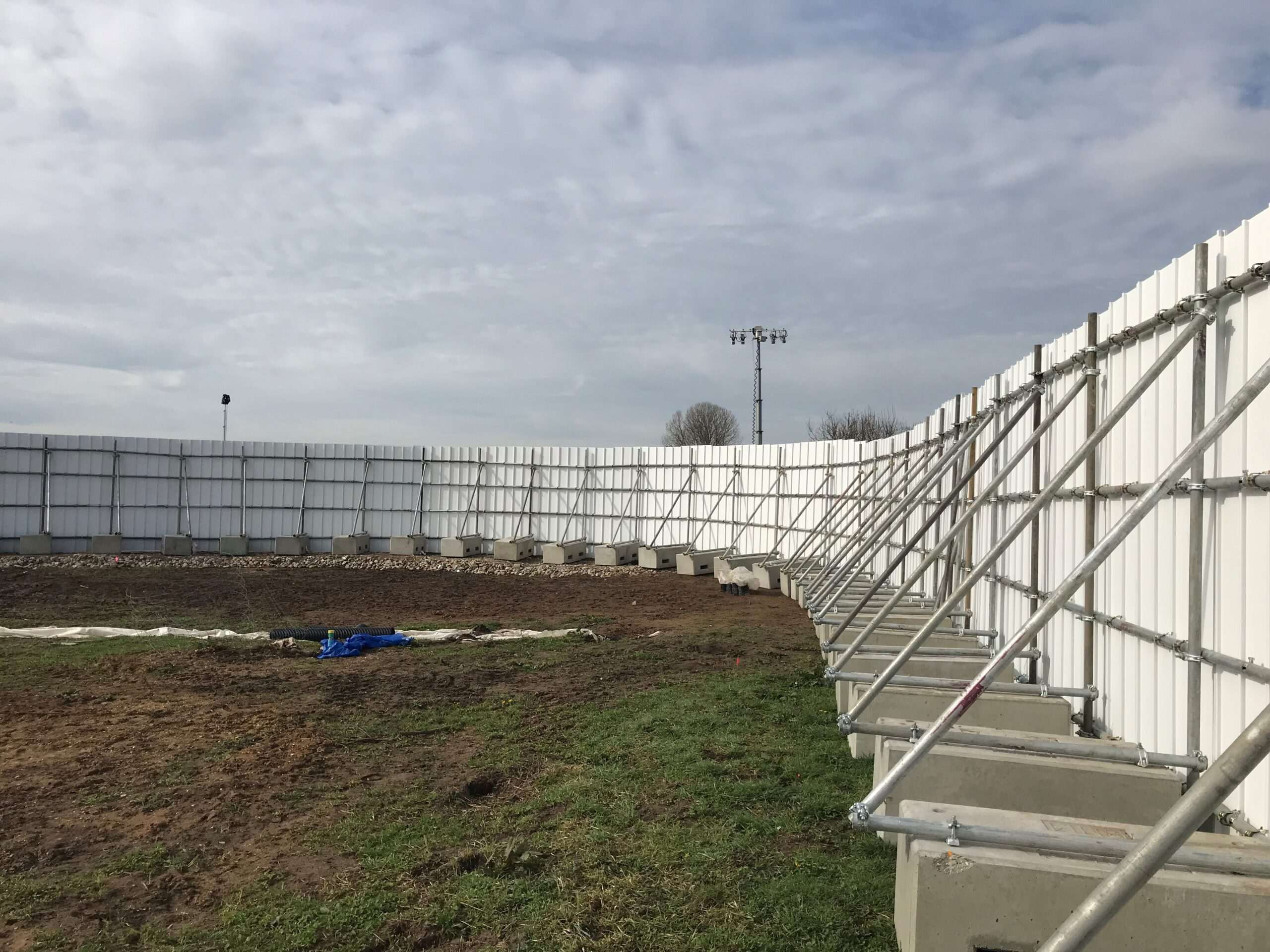
Whether it’s hoarding for a long-term construction site or temporary fencing for a refurbishment or event, choosing the right type of hoarding and the right installation method is essential for your project to succeed.
As suppliers of in-ground hoarding and on-ground hoarding systems for sale or rent, you can rely on GoHoard™ for durable solutions.
We’re here to help you understand the difference between on-ground hoarding and in-ground hoarding, so you can make the best choice for your site conditions and project requirements. Read on to learn more!
What is in-ground hoarding?
The traditional method of securing hoarding in place involves digging into the ground and anchoring the panels by driving posts into the ground. This type of installation provides increased strength and stability.
Our in-ground hoarding systems use double-welded scaffold tubes to fix the panels in place, and can include mesh doors for access.
In-ground hoarding is best used to secure boundaries around long-term sites that require high security, or sites with uneven ground that would be unable to support a stable on-ground installation.
Benefits of In-Ground Hoarding
The advantages of using our in-ground hoarding solutions include:
✓ Greater wind resistance – Installing hoarding directly into the ground makes it highly secure, even in severe weather conditions.
✓ Smaller footprint – With no need for surface support, site perimeters appear seamless and uncluttered, for a clean and solid finish.
✓ Reusable system – Made from recyclable materials and suitable for various ground conditions, this versatile hoarding can be reused.
✓ Professional installation – Preparing the ground should be straightforward, but we also offer an efficient installation service.
What is on-ground hoarding?
Unlike an in-ground installation, on-ground hoarding doesn’t require digging, as it doesn’t need to penetrate the surface. It simply sits on top of the ground and is anchored with heavy concrete blocks.
Our on-ground hoarding solutions use kentledge ballast blocks as counterweights for PVC or steel panels, which may have gates or doors.
On-ground hoarding is a cost-effective option for temporary works, short project timelines, and quick-turnaround pop-ups located in city centres, paved areas, or other sites where digging is not possible or permitted.
Benefits of On-Ground Hoarding
The advantages of using our on-ground hoarding systems include:
✓ Quick installation – With no excavation required, on-ground hoarding can be set up fast, with no damage to the ground.
✓ Easy removal – Similarly, on-ground systems are much simpler to dismantle and relocate quickly, with minimal disruption.
✓ Compliance – Suitable for public areas, protected sites, and other locations with regulatory restrictions on groundworks.
✓ Sustainability – Like our in-ground systems, our on-ground products are reusable, made from strong, recyclable materials.
How to choose the right hoarding installation
When choosing between in-ground and on-ground hoarding, you should also consider the potential drawbacks of each type.
For example, in-ground hoarding comes with higher installation costs, takes longer to set up and dismantle, and requires reinstating the ground afterwards. Meanwhile, on-ground hoarding has a larger footprint due to the 750kg SafeBlok™ ballast blocks, and may be less suitable for exposed areas with higher wind loads.
To decide which hoarding system is best for your project site, you should consider:
Can you dig into the ground?
If the ground is soft and you have the budget and no ground restrictions, then in-ground hoarding could be the better option. However, if there are underground cables, services, or other limitations, or the ground is hard or paved, you should use on-ground hoarding.
What is the duration of the project?
If your project only requires site hoarding for a few weeks or a few months, then on-ground hoarding will be easier to install and remove. For larger projects or slow-phased works lasting at least 6 months or more, in-ground hoarding will offer longer-term stability.
How secure/flexible does it need to be?
The longer the site boundaries are in place, the greater the risk of vandalism or weather damage. In-ground hoarding is the more robust choice, but if your perimeter needs to be repositioned regularly, on-ground hoarding is also strong but cheaper to relocate.
Contact GoHoard™ for reusable hoarding solutions
In summary, in-ground hoarding is a more permanent boundary-securing system that requires ground excavation, while on-ground hoarding is a weighted, surface-mounted system that’s more flexible for temporary usage.
Both types can offer strength and security for your site, but depending on the factors above, one might be more suitable than the other.
Once you’ve settled on in-ground hoarding or on-ground hoarding, you can explore our GoHoard™ range on our website, select the products you want to order, and request a quote to buy or hire them.
If you’re still not sure which system is most compatible with your project goals, the Go Hoard™ team will be happy to offer advice.
Just call us on 01226 654 040 or fill out the contact form on this page to discuss your requirements!